Chad Anderson is the founder and CEO of Space Capital, where he has been pioneering investment in the space economy for over a decade. He is also the author of “The Space Economy,” published by Wiley. Disclosure: Anderson is an early investor in SpaceX, along with dozens of other space companies.
Every quarter, Space Capital tracks every dollar flowing into the space economy. The midyear numbers are in: Private investment totaled $31.6 billion across 129 space companies in the first half of 2026 — more than all of 2025, making this the strongest year on record for the space economy, with two quarters still to go.
Since SpaceX (SPCX) came online in 2009, the space economy has attracted $488 billion across more than 2,400 companies. If the SpaceX initial public offering (IPO) felt like a climax for the sector, the data suggests it was just the opening act.
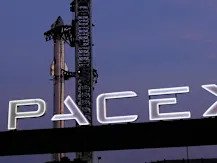
Thirty-three Raptor engines hang from the bottom of Booster 20 at Pad 2 as it prepares to roll back to SpaceX’s launch production facility in Starbase, Texas, U.S., July 17, 2026. REUTERS/Steve Nesius ·REUTERS / REUTERS
No event looms larger over these numbers than that IPO. The market finally has a public benchmark for the company that has done more than any other to shape the modern space economy. Yet almost immediately, the conversation shifted from valuation to identity, with some analysts asking whether SpaceX should even be considered a space company anymore.
That question misses the point. Wall Street has always categorized space under aerospace and defense — hardware businesses valued on government contracts and program backlogs. That box no longer fits. The value in space is accruing in layers that analysts cover elsewhere: communications, compute, and AI.
SpaceX has made the misclassification impossible to ignore.
The first AI IPO
SpaceX’s S-1 filing did not describe a rocket company. It described “the only company building the integrated hardware and software infrastructure of the future across space, connectivity, and AI.”
Look at the sequence of moves. SpaceX merged with xAI before the IPO. Days after going public, it acquired Cursor in a $60 billion all-stock deal. In the same quarter, it signed AI compute agreements with Anthropic (ANTH.PVT) and Google (GOOG, GOOGL) worth roughly $26 billion in annualized revenue, more than doubling the revenue it took the company two decades to build. It will make AI chips with Terafab for orbital data centers.
There’s a historical pattern here. Standard Oil owned the wells, refineries, pipelines, and tank cars. Carnegie Steel owned the mines, mills, and railroads. SpaceX is attempting something similar for the AI era by integrating launch, satellites, orbital compute, and AI into a single platform.
Space is becoming AI infrastructure, and AI is becoming the economic engine of space. Just as every company of today is a technology company, every company of tomorrow will be a space company. SpaceX is simply the first to be priced that way.
The exit argument is over
SpaceX’s long-term impact extends well beyond its $1 trillion-plus valuation. For a decade, the knock against the space economy was its lack of exits. That argument was refuted in Q2.
The SpaceX IPO is the largest liquidity event in venture capital’s history. It surpassed the full-year exit value of 2021 and generated more exit value than every VC-backed IPO of the past decade combined. It returned roughly 171 times the capital the company raised. Uber (UBER), at its 2019 debut, returned 2.7 times. That’s the difference between owning the applications and owning the infrastructure they’re built on.
The Q2 Space IQ report counted $90.3 billion across 42 exits in the quarter, including 35 acquisitions and seven public debuts. Jeff Bezos’s Blue Origin acknowledged for the first time that it will need outside capital to scale and didn’t rule out going public. The IPO window that was shut for years is now open, and space companies are walking through it.
SpaceX creates both opportunity and pressure
SpaceX’s relentless reduction in launch costs created today’s commercial space economy, and nearly every successful space business rides that tailwind. But the market is adjusting to a different reality: SpaceX is reportedly pulling back on rideshare to prioritize its own Starlink and AI satellites, alarming small satellite operators that rely on that capacity.
Eclipse Space founder Derek Huerta, part of the core team that built and scaled Starlink, calls this a reversion, not a collapse. The past five years of cheap, frequent rideshare were the anomaly. Falcon 9 was built to serve Starlink, and everyone else rode the excess capacity.
That reversion is where the opportunity lies. A decade ago, small launch companies built capacity ahead of demand, and it killed several of them. Today, demand is running ahead of supply, with new vehicles coming online against committed order books. As capacity tightens, access to orbit itself becomes more valuable, creating opportunities beyond rocket makers — in the companies that broker, manage, and enable launch services.
The next decade is already taking shape
Deal activity broadened even as capital concentrated behind perceived category leaders. Prometheus raised a $12 billion Series Bthe largest deep tech round ever for physical industrial engineering, to build AI that designs, manufactures, and operates physical assets. There are now 106 private space economy companies worth more than $1 billion, with a combined valuation of roughly $648 billion.
Most of that value remains locked in private markets, but the path to public exposure is widening. In addition to SpaceX, HawkEye 360 (HAWK) listed this quarter. Rocket Lab (RKLB) is vertically integrating in public view. A slate of late-stage candidates is lining up behind them — watch Blue Origin’s capital plans, the Iridium deal’s expected 2027 close, and the next wave of IPO filings.
Aashura is the Lead Researcher at CryptoListed.net. As a dedicated crypto investor and analyst since 2018, he specializes in creating clear, data-driven guides that help users navigate the market safely. Follow his latest insights on Twitter @[YourHandle].