
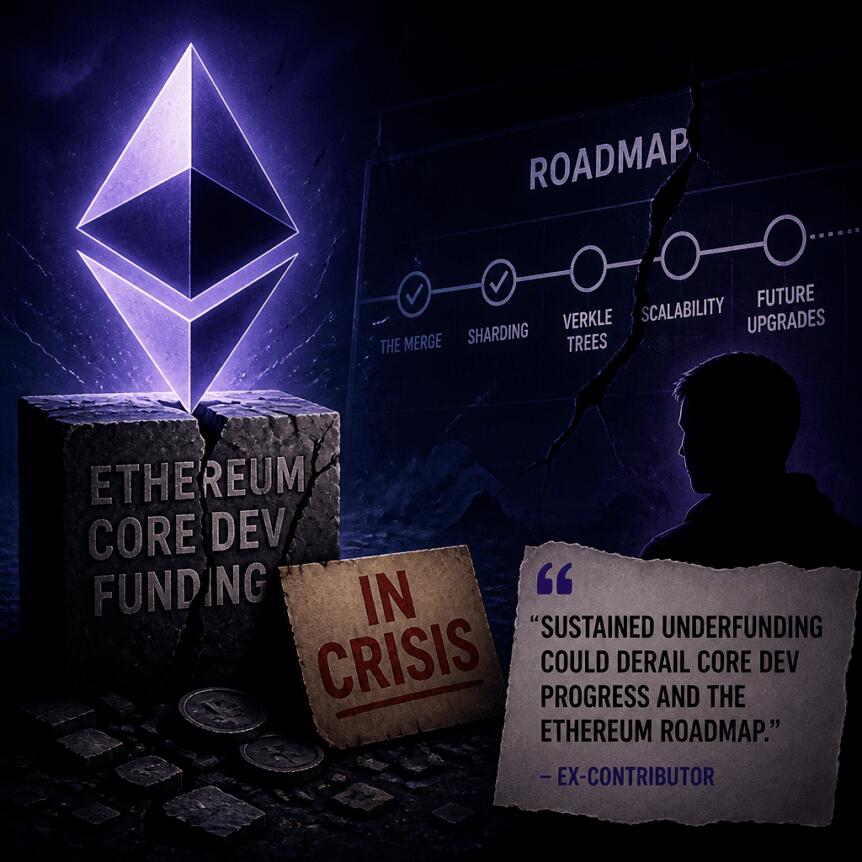
Ethereum is facing an urgent funding squeeze for its core development work, according to a warning from a former Ethereum Foundation contributor. Trenton Van Epps said the network’s funding apparatus could be pushed into a “slow-burning funding crisis” within the next three to nine months as key Foundation spending cuts and program expirations reduce the pool of ecosystem support.
The concern arrives amid a broader period of organizational churn at the Ethereum Foundation. Cointelegraph reported a continuing wave of leadership exits, including co-executive director Hsiao-Wei Wang announcing Thursday that she would step down—bringing departures and layoffs at the Foundation to 19 so far this year, according to the report.
Key takeaways
- Former Ethereum Foundation contributor Trenton Van Epps warns that the Ethereum ecosystem may need about $30 million annually to sustain core development.
- He links the risk to the Foundation’s spending reduction and the expiration of the Client Incentive Program in April.
- Ethereum co-founder Vitalik Buterin previously argued the Foundation has limited resources and framed its remaining ETH holdings as supporting “longevity over breadth.”
- Earlier treasury actions—un-staking and sales of ETH—suggest the Foundation has been adjusting its strategy to raise funds for protocol work.
A looming gap in core development support
In a blog post published Thursday, Van Epps said he is drawing his assessment from discussions with core development contributors. His central claim is that Ethereum’s core development ecosystem currently requires roughly $30 million in annual funding to function effectively.
Van Epps attributed the funding pressure to two concrete developments: the Ethereum Foundation’s reduction in spending and the expiration of the Client Incentive Program in April. Those changes, he argues, reduce recurring support for the teams and contributors that help keep Ethereum’s core clients and infrastructure moving.
“Slow-burning” is the key phrase here—rather than an immediate collapse, Van Epps suggests the situation may worsen gradually as funding for ongoing engineering efforts becomes harder to maintain. For readers, the practical takeaway is that ecosystem reliability and delivery timelines could become increasingly sensitive to how quickly new or replacement funding streams are established.
Treasury strategy shifts: “sell less ETH” and fund development
The funding debate is closely tied to how the Ethereum Foundation manages its ETH holdings. In a May 24 X post, Ethereum co-founder Vitalik Buterin described the Foundation’s resources as limited, noting that it holds about 0.16% of Ether’s total supply—far below the share held by some other networks’ foundations.
Buterin said the Ethereum Foundation was originally designed for a narrower scope: advancing Ethereum’s core software and helping the network reach major roadmap milestones. He argued that many of those milestones were largely completed by 2022, which frames a strategic shift toward what he described as longevity-focused use of remaining resources.
“And so today, the EF is choosing to use its remaining resources to pursue longevity over breadth (yes, this means we sell less ETH),” Buterin wrote.
According to Cointelegraph coverage, the Foundation has already taken steps that adjust its ETH exposure and liquidity. It reportedly un-staked 17,000 ETH in late April and then un-staked another 21,270 ETH in early May, after nearly surpassing 70,000 ETH staked earlier in the year. Cointelegraph also reported that the Foundation sold 10,000 ETH to Bitmine in an OTC deal on May 1.
Blockchain analytics platform Arkham suggested the un-staking may have been tied to the Foundation’s need for funds to continue developing the network. While Arkham’s explanation is not a formal confirmation of intent, it aligns with the broader pattern: if development funding needs remain, the treasury will face pressure to provide capital without destabilizing its longer-term strategy.
Policy update attempts to balance staking and sell pressure
The Foundation’s stance on treasury management has also evolved in response to community reaction. Cointelegraph reported that the Ethereum Foundation published a June 2025 policy update stating that increasing its staking participation could help fund protocol development while limiting future ETH sales after backlash over earlier disposals.
That approach matters because it highlights a tension investors and builders may be watching closely: the Foundation needs enough liquidity to support core work, but it also faces political and reputational costs when selling ETH is perceived as excessive. The reported mix of un-staking, OTC sales, and a subsequent policy pivot toward staking suggests the Foundation is trying to thread a needle—raising funds while reducing the rate of direct ETH disposals.
At the same time, Van Epps’ warning raises a different question: even if treasury mechanics are tweaked, is the resulting funding level sufficient and stable enough to cover the ecosystem’s real-world costs?
Why the funding crisis risk is now more than theoretical
The reason this story is likely to matter beyond internal governance debates is that “core development” is not a static category. Client teams, security research, protocol maintenance, and infrastructure improvements are continuous efforts. If funding drops abruptly—especially through the expiration of a program like the Client Incentive Program in April—then the ecosystem may need time to reallocate responsibilities or secure replacement support.
Van Epps’ estimate of an approximately $30 million annual requirement provides a concrete yardstick for measuring whether proposed changes—whether treasury adjustments, new funding mechanisms, or redesigned incentives—can offset the gap created by earlier spending reductions. If the gap persists, the most likely consequences are slower delivery, fewer funded contributors, or increased reliance on volunteers and short-term grants.
Layered on top of this are the leadership changes highlighted by Cointelegraph, including Hsiao-Wei Wang stepping down. Organizational transitions don’t automatically determine engineering outcomes, but they can affect how quickly decisions get made and how funding priorities are implemented—particularly during a period already flagged as vulnerable.
For now, readers should watch whether the Ethereum Foundation’s funding strategy adjustments translate into sustained support at the ecosystem level—especially once the next funding cycles approach. The open uncertainty is whether treasury policy changes and ETH management actions can fully cover the annual core development needs Van Epps outlined, or whether Ethereum will need genuinely new funding sources sooner than expected.