
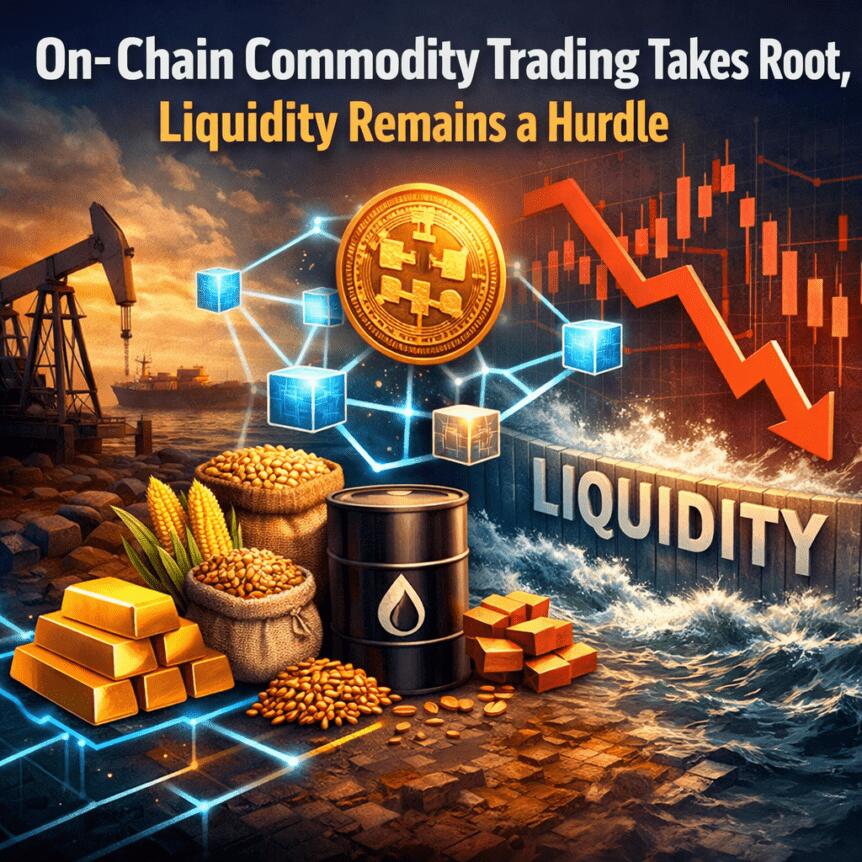
Onchain commodity trading is attracting sustained attention as a viable channel for macro risk exposure, yet the market still wrestles with liquidity gaps that keep it from fully rivaling traditional venues. A new milestone for Hyperliquid’s HIP-3 market shows the trend toward broader onchain adoption, while observers flag key bottlenecks that could determine whether this momentum endures.
Key takeaways
- HIP-3 posted an all-time volume high on March 23, with about $5.4 billion in perpetual futures across commodities and macro assets, according to Artemis Analytics. Silver led the pack with roughly $1.3 billion in activity, followed by WTI crude ($1.2B), Brent ($940 million) and gold ($558 million).
- Traders are increasingly seeking macro-style exposure onchain. The shift isn’t limited to crypto-native participants; traditional finance actors are entering via personal accounts, expanding weekend and off-hours participation.
- Price discovery onchain is gaining traction during weekend and after-hours periods, but liquidity depth and price reliability on onchain venues remain weaker than centralized traditional exchanges.
- Liquidity depth, tighter spreads and clearer regulatory frameworks remain the main hurdles for broader institutional participation, according to market observers.
- The onchain macro narrative is expanding beyond commodities, with market participants anticipating broader asset classes to follow the same weekend-discovery dynamic as volatility shifts.
Onchain activity hits new highs as macro exposure gains traction
Data from Artemis Analytics shows a clear spike in onchain macro trading, centered on Hyperliquid’s HIP-3 market. On March 23, HIP-3 recorded a fresh all-time high, tallying roughly $5.4 billion in perpetual futures volume that spanned commodities and macro assets. The standout drivers were silver, oil and gold, with silver accounting for about $1.3 billion, West Texas Intermediate (WTI) crude around $1.2 billion, Brent crude at $940 million, and gold near $558 million. Equity indices, including the Nasdaq and S&P 500, also reflected notable flow on the platform.
Industry participants describe the surge as a signal not merely of higher trading activity, but of shifting intent: more market participants are seeking real-time, onchain access to macro trends. “Previously, onchain commodity futures were mostly a venue for crypto-native investors; that is no longer the whole story,” said Iggy Ioppe, chief investment officer at Theo. “The real tell isn’t just the volume; it’s who is trading and when they show up.”
“The real tell is not just the volume, it’s when the volume shows up and who is showing up to trade.”
— Iggy Ioppe, chief investment officer at Theo
Ioppe emphasized that onchain oil futures markets are now processing more than $1 billion in daily volume over weekends, a period when traditional exchanges are closed. He attributed part of the shift to individual traders from traditional finance who are accessing these markets via personal accounts. “Geopolitics does not stop on Friday afternoon, and markets are starting to adapt to that fact,” he observed.
In a broader sense, the data underscore a larger trend: traders are becoming more comfortable accessing macro-style exposure onchain, with gold and oil leading the development. While the current wave is anchored by commodities, observers anticipate similar patterns proliferating into other asset classes as volatility evolves.
Weekend price discovery creates a notable edge for onchain venues
A defining characteristic of onchain trading, according to industry voices, is the ability to operate around the clock. With an approximately 49-hour gap between the close of traditional markets on Friday and their Sunday reopening, decentralized platforms have become among the few places where traders can respond to macro developments in real time. This dynamic is already influencing how prices are formed beyond regular trading hours, even though traditional venues still provide the lion’s share of liquidity.
“Onchain is the price discovery layer when the rest of the market is asleep. TradFi remains the depth layer when size matters most,” said Sergej Kunz, co-founder of 1inch. The contrast highlights a structural gap: while onchain venues can react instantly to headlines, the ability to execute large trades without slippage still hinges on deeper liquidity and tighter spreads available in traditional venues.
Comparisons to established markets illustrate the scale difference. On the CME, crude oil futures regularly trade between 1 million and 4.5 million contracts daily, translating to roughly $100 billion to $300 billion in notional volume. These figures reflect the vast depth and execution quality that onchain platforms have yet to match on a practical, institutional scale.
Liquidity depth and market structure: the remaining hurdles
Even as weekend and off-hours activity gains traction, liquidity depth remains a central constraint for broader adoption. Experts point to two intertwined challenges: pricing reliability and market structure maturity. “Traditional venues still dominate when it comes to liquidity, execution quality, and institutional-scale pricing depth,” noted Sergej Kunz. He argued that unless onchain venues offer materially deeper liquidity and tighter spreads, sizable trades risk moving prices unfavorably and deterring large players.
Shawn Young, chief analyst at Mexico Research, added that while there are signs of behavioral shifts—more traders seeking macro exposure onchain—gaps in liquidity and price aggregation persist. He cautioned that commodity tokenization represents a real, but early-stage, development that will require maturation in pricing, data quality and regulatory clarity before it becomes a steady alternative to legacy markets.
Beyond commodities: a broader onchain macro narrative
Despite early-stage constraints, the trajectory appears to point toward broader macro participation onchain. Kunz framed it as a larger trend: “The broader direction is clear: traders are becoming more comfortable accessing macro-style exposure onchain.” While gold and oil currently dominate the flow, industry observers expect analogous patterns to emerge across other asset classes as market volatility continues to evolve.
As weekend pricing gains legitimacy and trust in onchain price formation grows, more market participants—especially those who already trade in traditional markets—may begin to rely on onchain venues for off-hours exposure. This could gradually contribute to higher open interest and more robust price discovery over time, reinforcing a feedback loop that strengthens the credibility of onchain valuations.
For now, the line between onchain and traditional markets remains clearly drawn: the former offers around-the-clock access and rapid reaction to macro events, while the latter provides depth, reliable execution, and institutional pricing power. Observers say continued progress will depend on improving liquidity, refining price aggregation, and navigating evolving regulatory expectations.
Related coverage from industry reporting highlights emerging milestones like S&P Dow Jones’ licensing of S&P 500 perpetuals for Hyperliquid, signaling growing mainstream engagement with onchain derivatives. As the landscape evolves, market participants will be watching whether expanded weekend activity and broader macro exposure onchain translate into lasting open interest gains and deeper liquidity across asset classes.
For readers tracking the trajectory of onchain futures, Artemis Analytics remains a key data touchstone for measuring volume and asset mix. The latest data point—an all-time HIP-3 high—suggests growing demand for onchain macro exposure even as questions about liquidity depth, price reliability and regulatory clarity continue to shape the conversation about how soon onchain venues can mature into viable, full-scale competitors to traditional exchanges.
What comes next will hinge on whether onchain platforms can translate weekend and after-hours momentum into sustained liquidity and tighter pricing, and whether institutional participants increasingly trust onchain pricing during times when TradFi is open and active. In the near term, observers will closely watch how other asset classes respond to the ongoing push for macro exposure onchain and whether the weekend price formation dynamic broadens beyond metals and energy.