
Ethereum co-founder Vitalik Buterin proposed splitting 1 ETH into two paired option assets that always sum back to 1 ETH, eliminating forced liquidations and letting synthetics rely on slow, prediction-market-style oracles.
Ethereum co-founder Vitalik Buterin on Monday proposed rebuilding decentralized finance on options contracts instead of collateralized debt, a shift that would eliminate forced liquidations and let synthetic assets run on slow, prediction-market-style oracles rather than the real-time price feeds driving most of DeFi today.
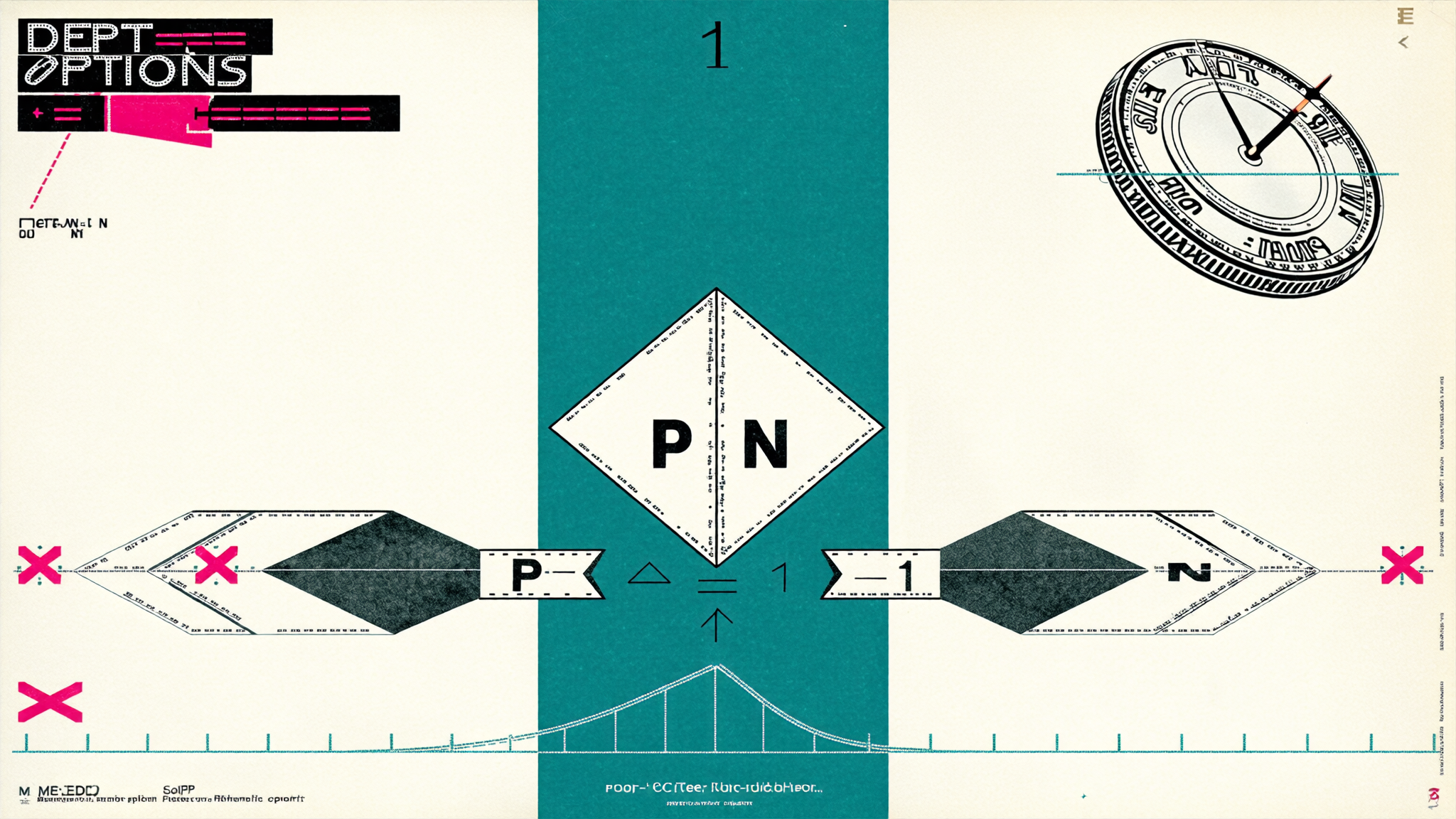
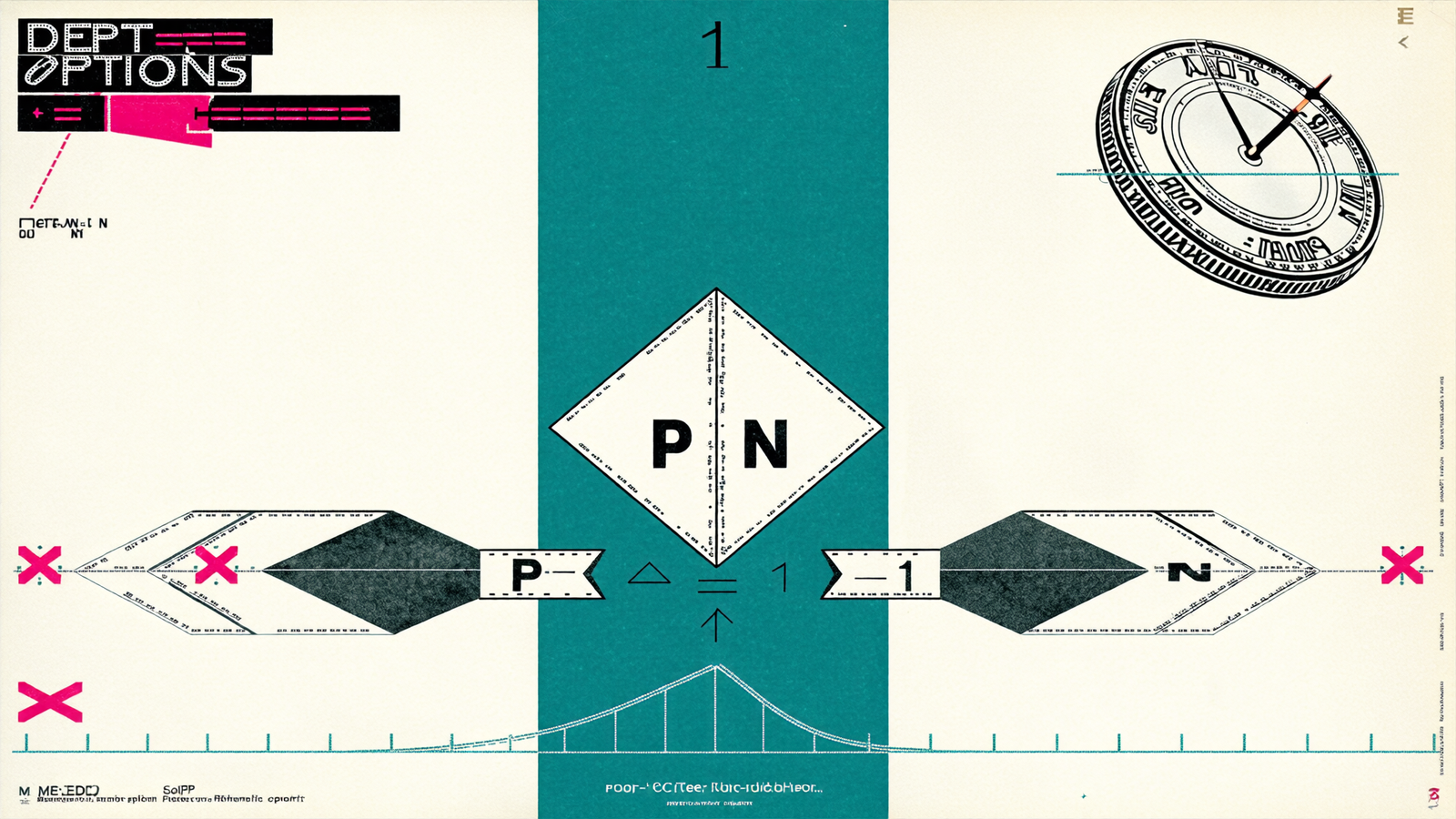
The proposal, Building index-tracking assets on top of options instead of debtpublished on the Ethereum Research forum, defines two assets P and N with strike price S and maturity date M. A (P, N) pair is minted from one ETH and can be redeemed for one ETH at any time. At maturity, an oracle resolves the index to x; P receives `min(1, S/x)` ETH and N receives `max(0, 1 – S/x)` ETH. Because the two payoffs always sum to 1, “there is no possibility of liquidation,” Buterin wrote. The post credits feedback from Lighter founder Vladimir Novakovski and developers of the Curve decentralized exchange.
Liquidation cascades have been DeFi’s dominant failure mode for half a decade. On March 12, 2020ether fell roughly 43% in hours, MakerDAO keeper bots failed to bid, and a single bot walked off with $8.32 million of ETH for zero DAI. Maker took on a $6.65 million Dai shortfall and later paid $1.16 million to settle a class action from vault owners. Every CDP-based protocol since has been tuned to the assumption that bidders show up; Buterin’s design removes the auction entirely.
What the Mechanism Changes
“The problem with relying on liquidations is that liquidations depend on real-time oracles,” the post argues. “You cannot use what is by far the most effective technique to make a safe and cheap oracle: put a prediction market in front of a safe but expensive oracle, and only use that oracle in case of serious disagreement.”
Splitting one ETH into a P/N pair fixes that — the system is solvent by construction, so the oracle can resolve at maturity instead of every block. Buterin equates the design to scalar prediction markets on platforms like Seer, letting the instrument share oracle infrastructure with markets that have run for years.
Where Options-DeFi Already Exists
The primitive is not net-new. Panoptic runs perpetual, oracle-free options on Ethereum mainnet by tokenizing Uniswap v3 LP positions. Opyn’s Squeeth wraps a power-perp on ETH-squared exposure. Premia operates an options AMM with portfolio margin. What Vitalik proposes sits one layer higher: a synthetic that tracks a price index by stacking options rather than borrowing against collateral.
The user playbook is to hold deep in-the-money options and rotate them into lower strikes as the price gets close. Rebalancing could run through an automated DAO wrapper or through a local daemon — the latter, Buterin notes, “reduce[s] the user’s MEV risks, because the transaction is not visible ahead of time.”
The 2% Tax
The cost is drift. Holders of P don’t get a clean dollar peg; they get a quadratic deviation from their target exposure that grows with the gap between current price and strike. Buterin pegs the realistic range at “standev ~1-4% per year” and reframes it as a feature. The design is “unusable as an ‘accounting stablecoin'” — a counterparty or tax authority won’t treat one P as one dollar — but works “in the context of ‘I want price stability’,” meaning pre-funding a known share of future expenses.
The bigger competitive risk, Buterin warned, is rebalancing itself. “It is very easy to lose 2% per year or more from multiple rounds of slippage, and this is the largest risk by which this whole scheme might become uncompetitive.” His proposed mitigation exploits the fact that rebalancing users have very low time preference — they don’t care whether they trade today or three days from now — to build “an ideal market structure that minimizes slippage far more than traditional AMMs do.”
The post is research-grade rather than a deployment plan, and no protocol has yet committed to building on the spec.